
Auto Refill: Designing for Regulatory Complexity
Scaling the self-serve experience
Led design across web and native platforms, working closely with product, engineering, and business partners to turn research and regulatory requirements into clear, scalable experiences for patients.
Role
Duration
8 Weeks
Tools
Figma, Mural, UserZoom, Teams
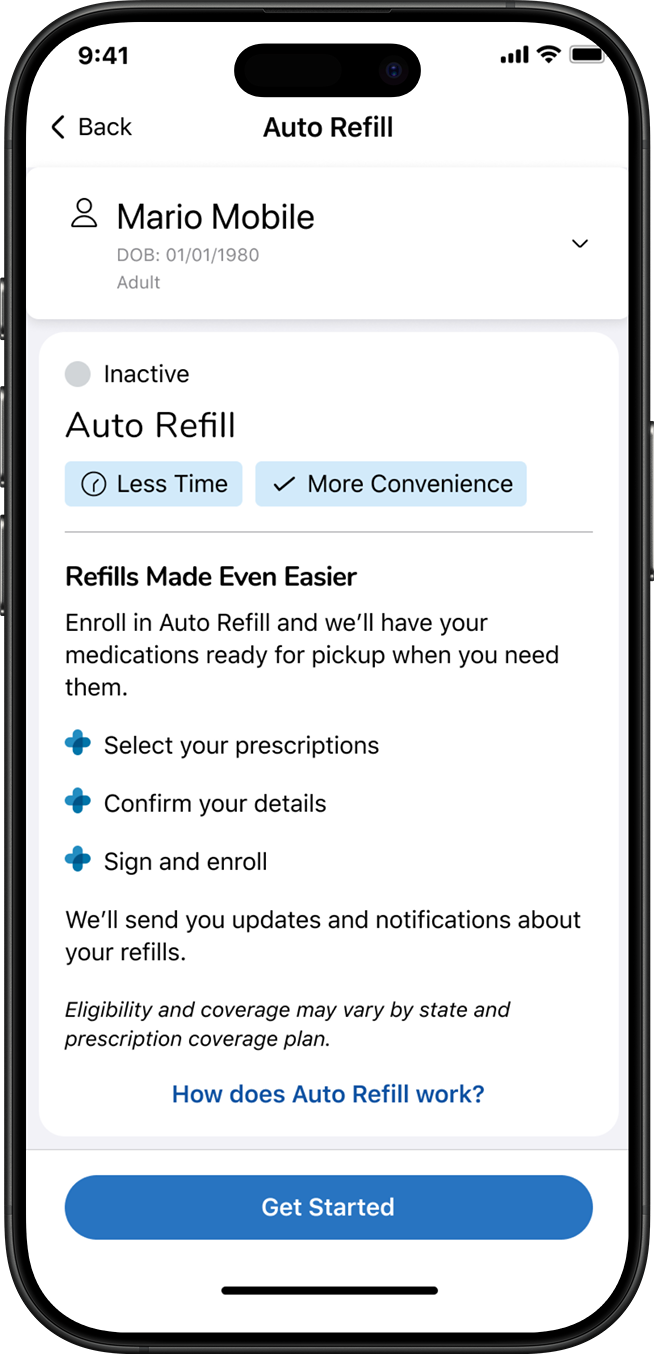
As the Product Designer responsible for the customer-facing digital prescription management experience, I led the expansion of Auto Refill into previously restricted states while laying the foundation for scalable refill program management across web and native platforms. This work balanced strict regulatory compliance and complex account management scenarios, while materially improving engagement, adherence, and operational efficiency.
The project delivered two tightly connected outcomes:
Refill Settings — a new program-level management hub
Auto Refill — enabling compliant self-service in CA & IL with universal improvements nationwide
Overview
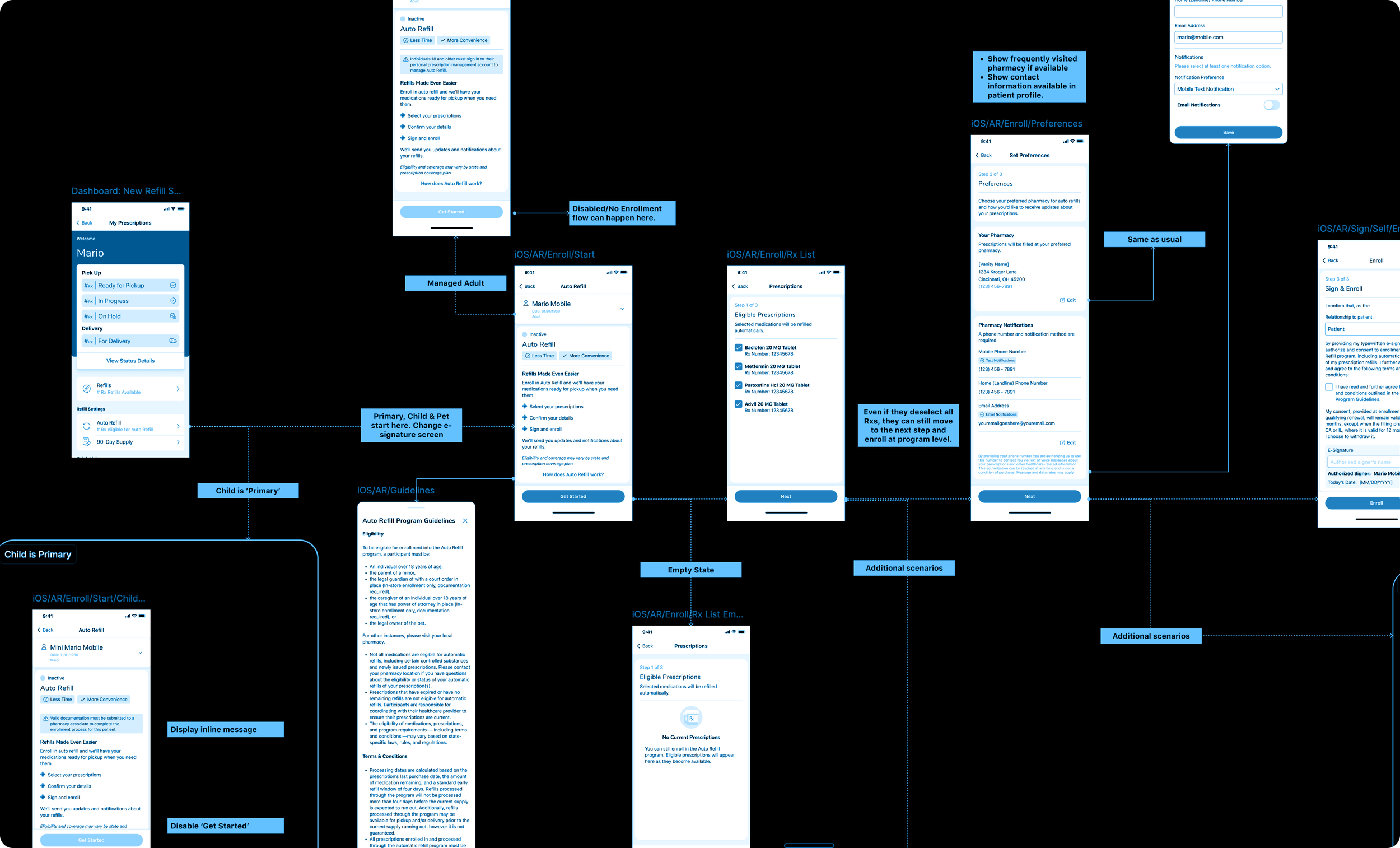
Creating the structural foundation needed for compliance-driven expansion
During a separate research initiative, customers consistently interpreted Auto Refill as a “setting,” not a one-off action. This insight unlocked a more scalable mental model: a program-level management hub.
Designing a new Refill Settings hub that centralized enrollment, consent, and management for Auto Refill and future programs helped to set the stage for the larger Auto Refill expansion project, positioning Refill Settings as a dedicated destination
Designed for extensibility (Auto Refill now, 90-Day Supply next)
Reduced technical dependency on other features
Auto Refill Scope & Complexity
This was an XL-sized initiative that required tight coordination across legal, compliance, backend pharmacy systems, and associate experience partners. Establishing a centralized Refill Settings hub was a foundational system decision, creating a dedicated layer where complex program logic could live without overloading the broader prescription experience.
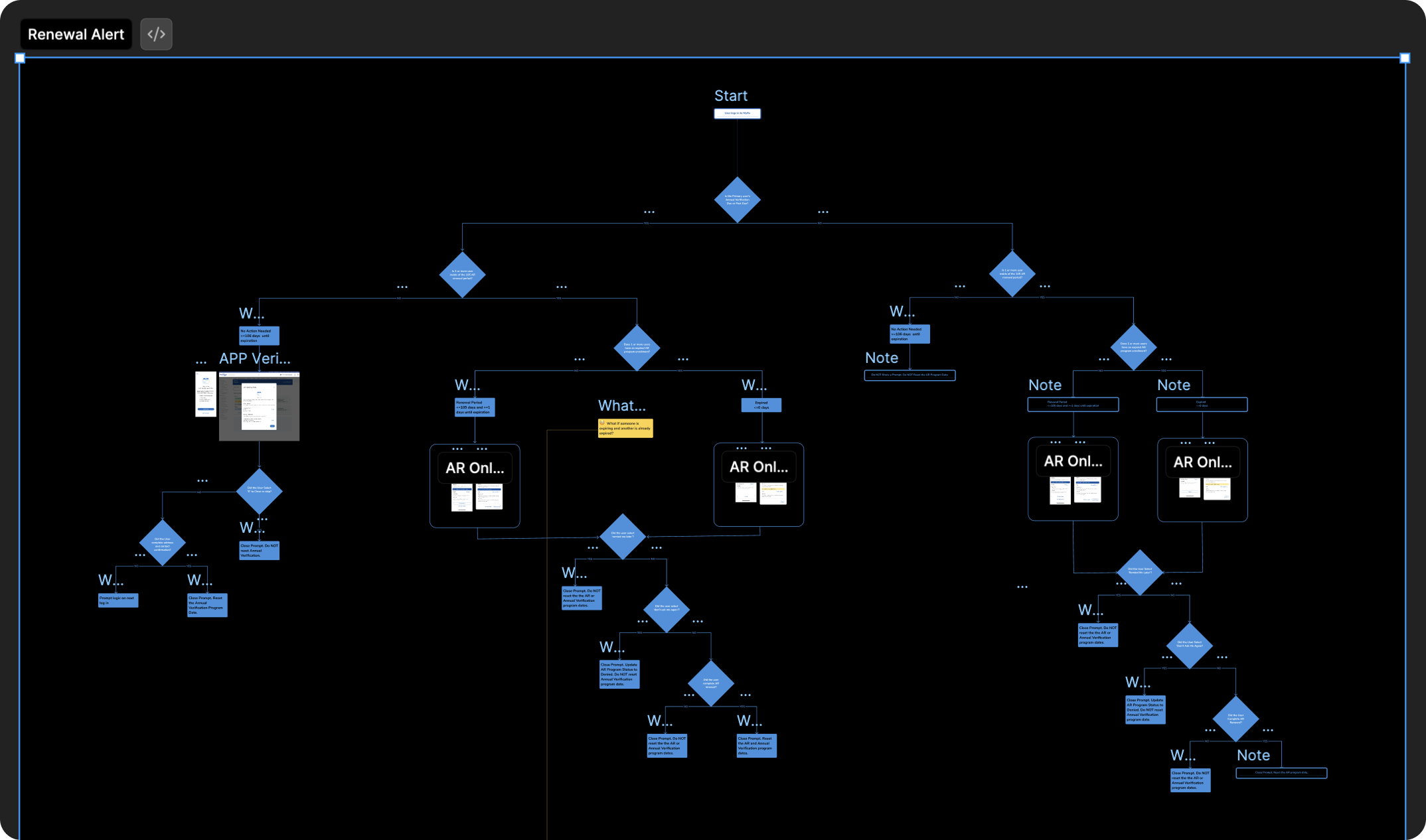
By mapping state-specific regulatory requirements against existing platform capabilities, future development needs, PHI considerations, and decision flows, I helped the team understand the full system upfront. This work clarified constraints, aligned partners early, and enabled teams to begin planning and development in parallel—well before final UI designs were complete.
Impact
Not only did we successfully enable Auto Refill in newly regulated markets (CA and Illinois), but post-launch reporting showed an approximate 70% increase in weekly Auto Refill enrollments. More importantly, customers began actively managing their Auto Refill settings, pausing, updating, and removing medications as needed, indicating improved adherence and reduced return-to-stock rates by preventing unnecessary prescription preparation.
While enrollment growth stabilized, the real success was in how behavior changed. Customers moved from passive enrollment to actively managing Auto Refill, delivering value for the business and better outcomes for the 5M+ patients I support through my work.